
Highlights
Explore the places on our private tours. Each guide introduces the stop and lists the tours that visit it.
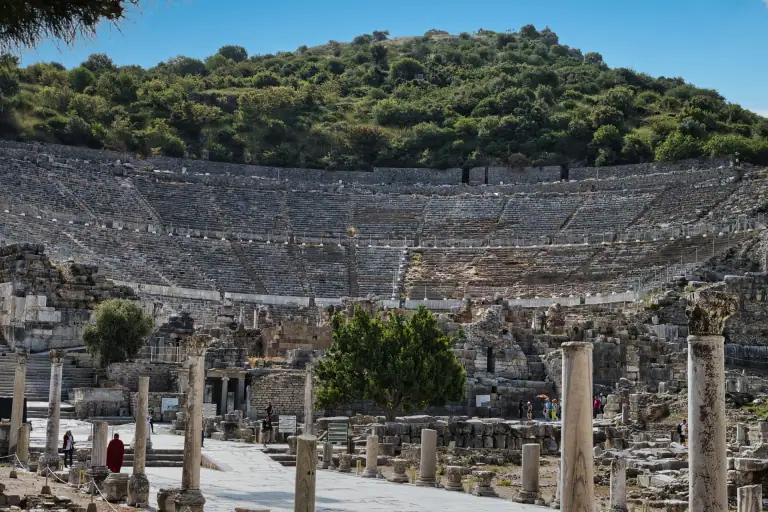
Ephesus Ancient City
Follow the slope from the civic quarter towards the Library of Celsus and the Great Theatre. The road beyond the theatre once led to a harbour. Its distance from the sea today helps explain how silting reshaped the city.
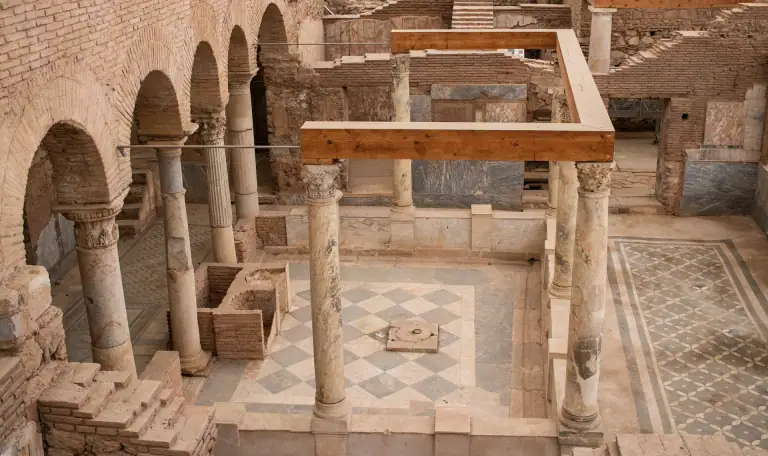
Ephesus Terrace Houses
Step inside the residential quarter above Curetes Street. A courtyard brought daylight into rooms decorated with mosaics, marble panels and painted plaster. From the raised walkways you can follow the thresholds that separated family life from rooms used to receive guests.
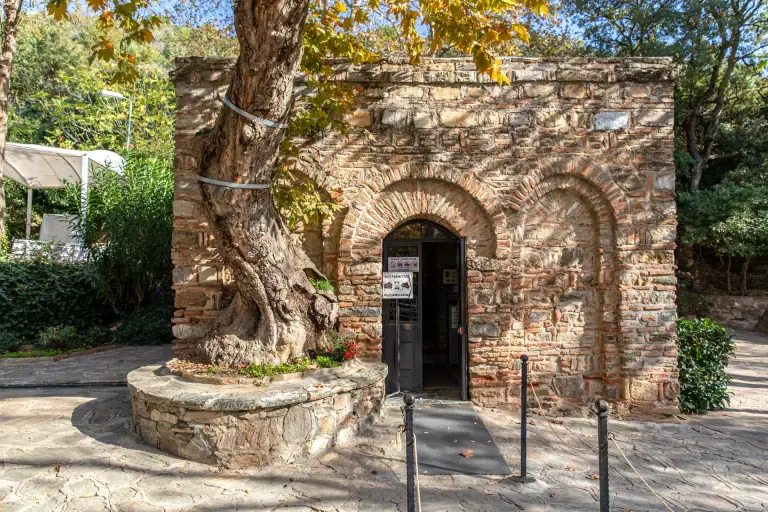
House of the Virgin Mary
A small stone sanctuary on Mount Koressos is a place of Christian pilgrimage. Its association with Mary belongs to religious tradition. The quiet chapel and the wooded approach offer a different experience from the excavated churches in the ancient city.
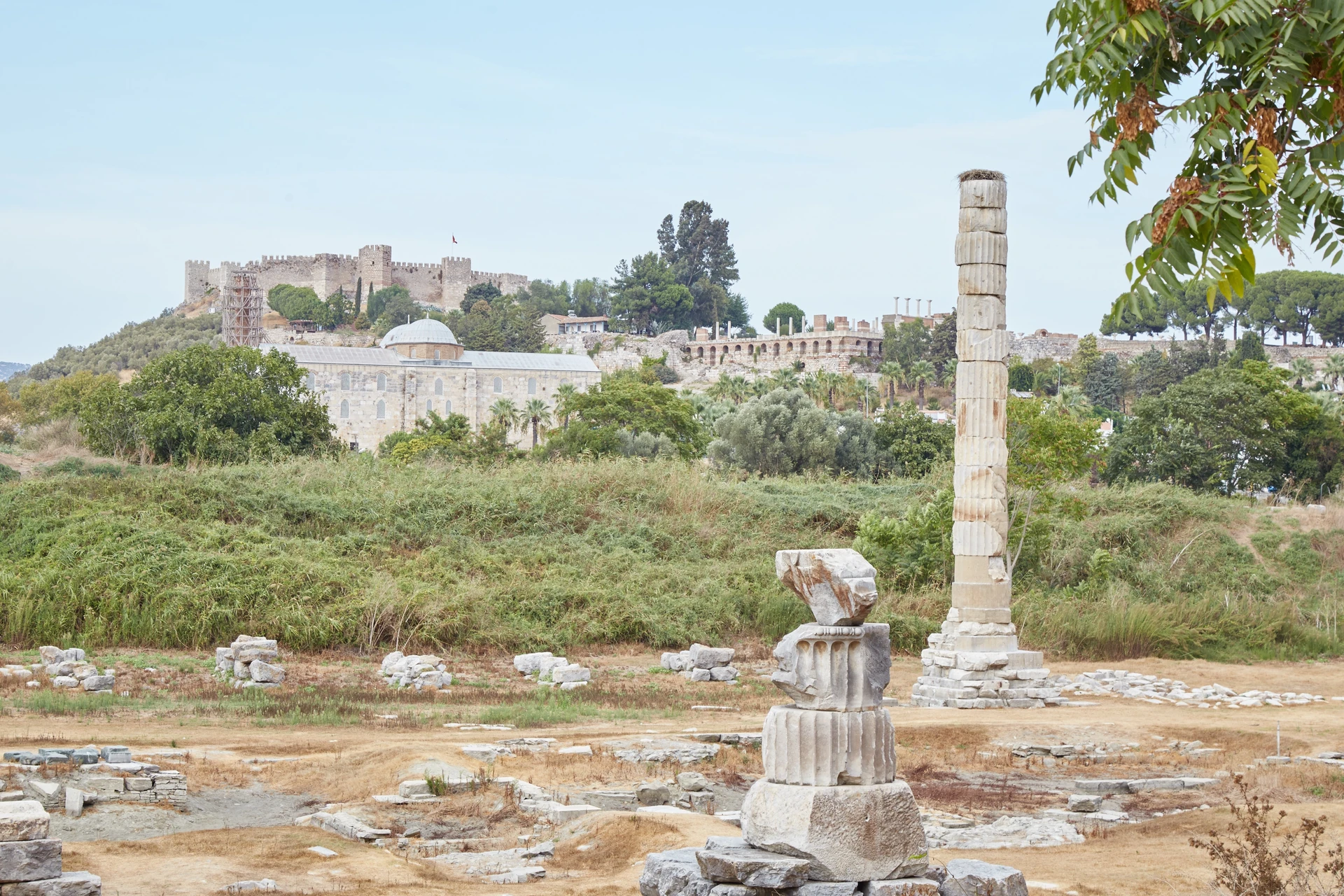
Temple of Artemis
At the Artemision near Selçuk, an isolated reconstructed column marks the scale of the sanctuary. The temple stood outside the later Roman city. Its setting on low ground helps explain why the famous building and the remains visible today look so different.
Basilica of St. John
On Ayasuluk Hill, the outline of a large Byzantine basilica surrounds a tomb traditionally associated with the apostle John. Follow the broad nave towards the crossing to understand how pilgrims once approached the shrine. The hill also gives a view across the plain towards ancient Ephesus.
Church of Mary at Ephesus
Within the ancient city, a long Roman building was adapted for Christian worship. The Church of Mary is associated with the Council of Ephesus in 431. Look for the apse and the baptistery as you trace the changing use of this part of the harbour quarter.
Ephesus Archaeological Museum
The museum in Selçuk brings excavated objects close enough to examine their surfaces. The statues of Artemis of Ephesus show how distinctive the local cult image was. Household finds give a more intimate view of the people who occupied the city’s grand buildings.
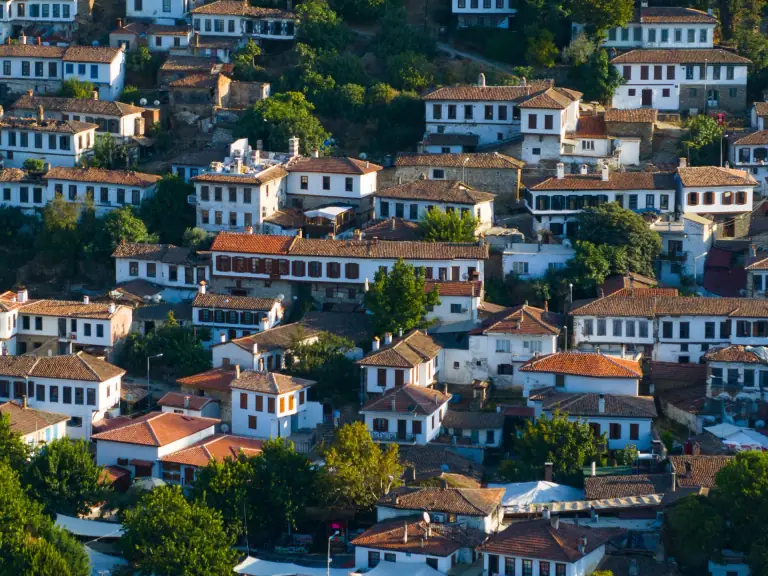
Şirince Village
Walk between hillside houses above Selçuk and notice how one street looks across the roofs of the next. Vineyards, orchards and village trade connect the settlement to its surrounding land. Its former Greek Orthodox churches recall the community that lived here before the population exchange.
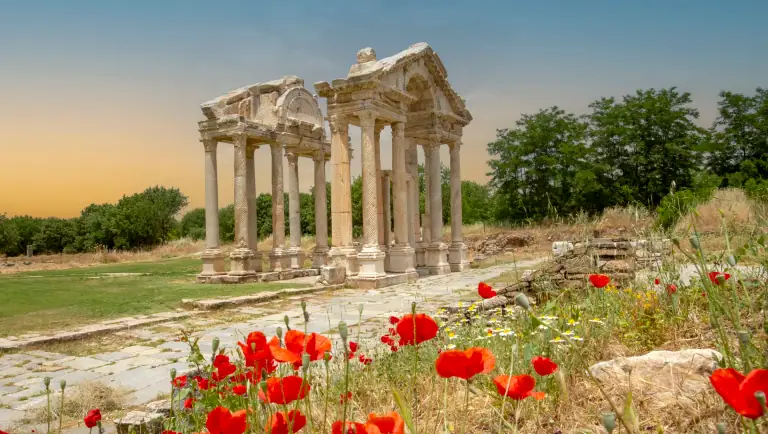
Aphrodisias
Marble was both a local resource and a sculptor’s material here. Compare the carved figures with the unfinished surfaces that reveal workshop technique. The Tetrapylon, the stadium and the sanctuary of Aphrodite show how sculpture fitted into the public spaces of a living city.
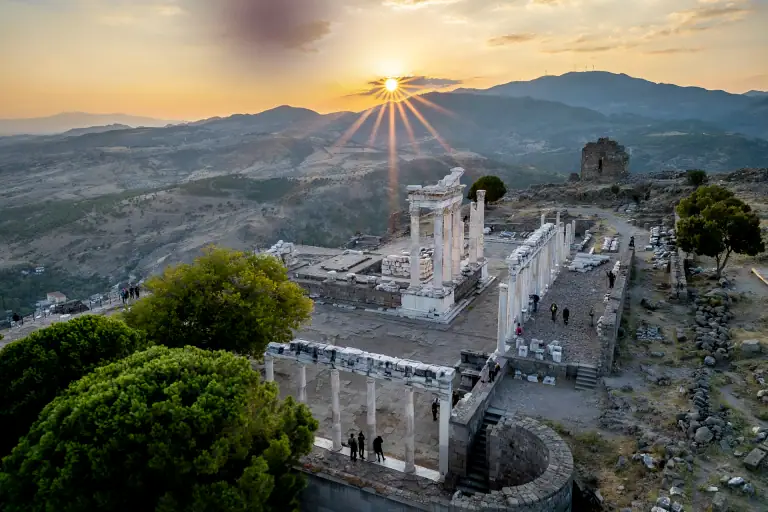
Pergamon Acropolis
Pergamon rises in terraces above modern Bergama. Its steep theatre makes the relationship between hillside and architecture especially clear. Look across the changes in level to see how the Attalid rulers arranged places for worship, government and public gatherings on a constrained summit.
Pergamon Asklepion
Below the acropolis, the sanctuary of Asklepios received people seeking healing. Its ceremonial approach, water features and covered passages shaped the visitor’s experience. The theatre and courtyards show how healing, worship and sociability shared space in the Roman sanctuary.
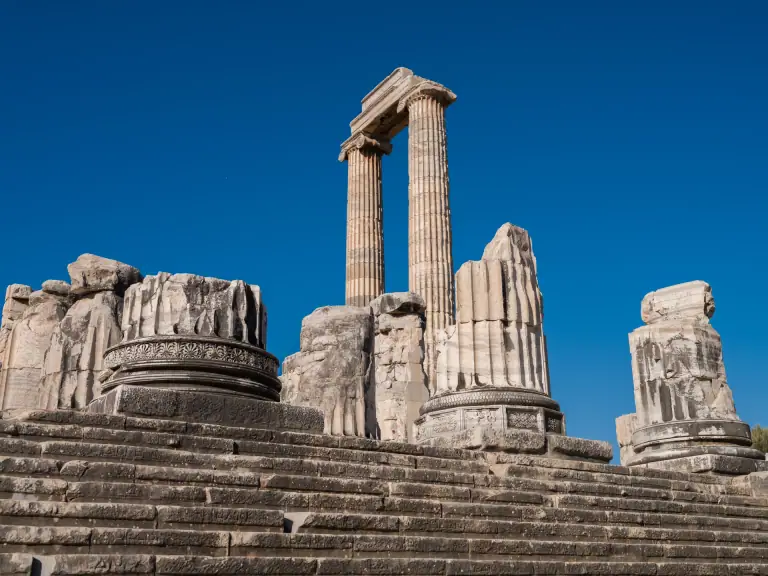
Didyma and the Temple of Apollo
This sanctuary belonged to the religious landscape of Miletus. Its enormous column bases lead to a surprise inside the temple, where passages descend towards an open court. The difference in ground level helps explain how the sanctuary enclosed a sacred place without roofing it over.
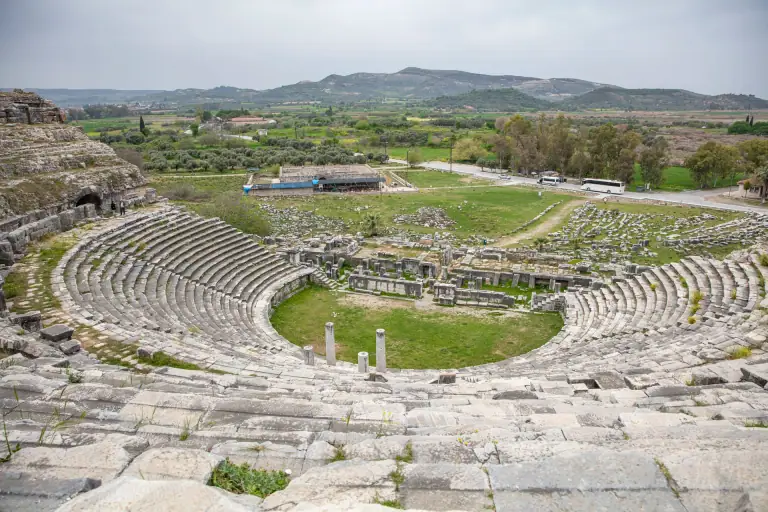
Miletus
Once a maritime city, Miletus now lies inland on the plain shaped by the Maeander River. Stand back from the theatre to see how its masonry rises over the flat ground. Baths, public squares and former harbour areas help put the scale of the ancient port in perspective.
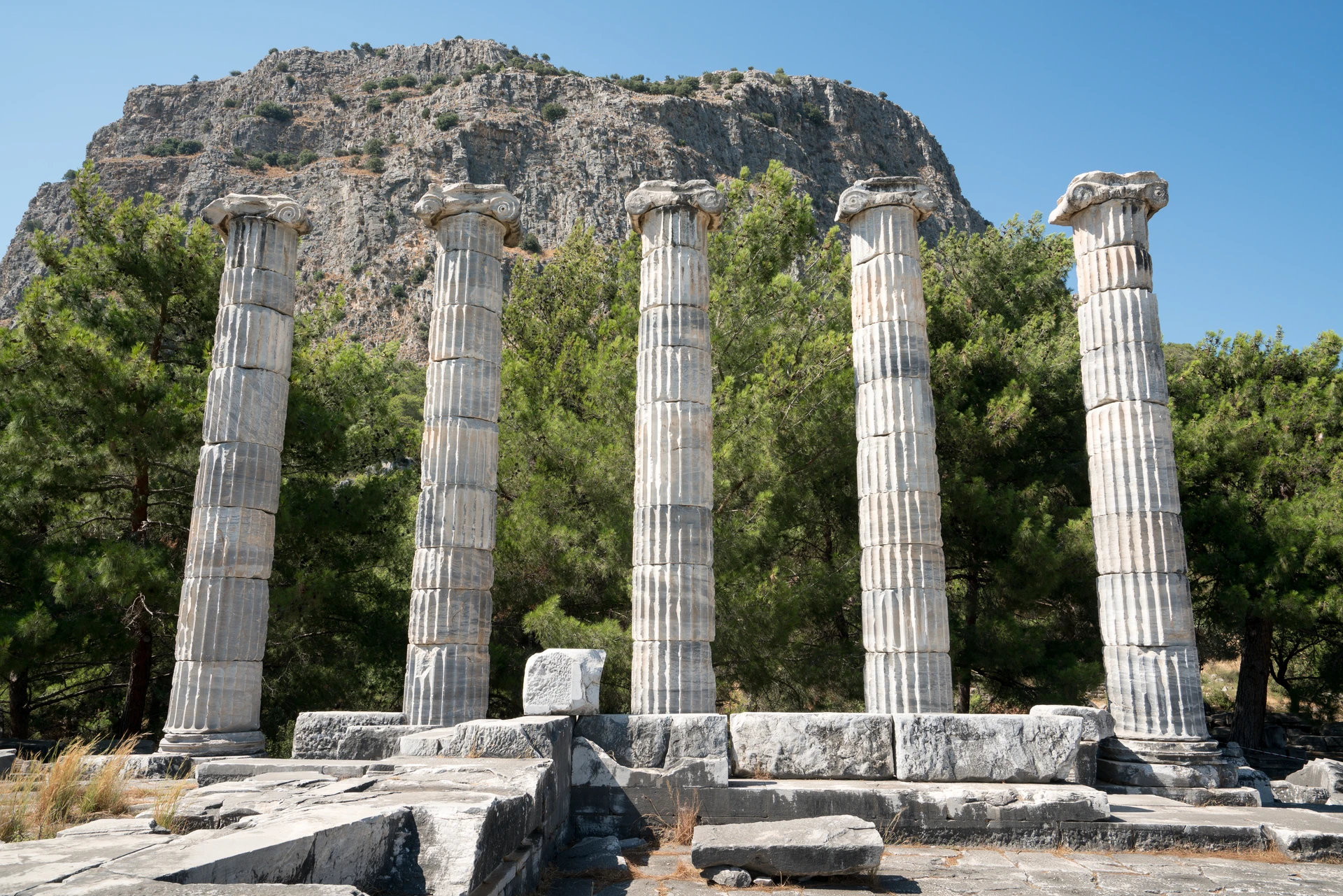
Priene
At the foot of Mount Mycale, straight streets meet a hillside that refuses to be flat. Steps and terraces made a grid plan possible on the slope. The sanctuary of Athena, the theatre and the houses give three very different ways of reading this compact Greek city.
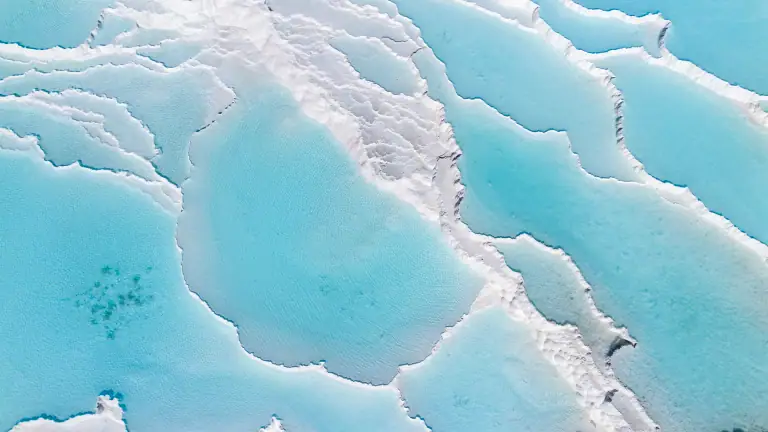
Pamukkale Travertines
Mineral-rich water has deposited pale layers along the hillside above the Lycus valley. Rims, channels and shallow basins show the changing paths of the flow. View the terraces from the designated route so the fragile deposits can continue to form.
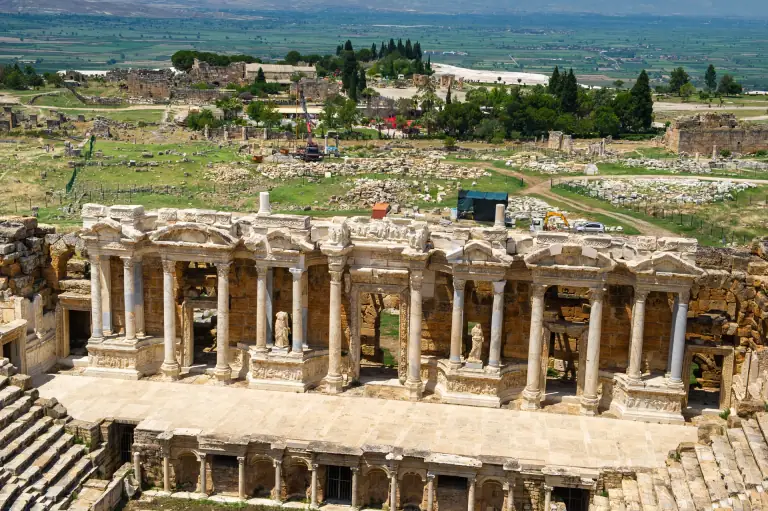
Hierapolis
Above the travertines stood a city of streets, baths, sanctuaries and burial grounds. The theatre preserves an elaborate stage front, while tombs along the approach roads reveal how families commemorated their dead. The hot springs connect the archaeological site to the landscape below.
Karahayıt
North of Pamukkale, spring water leaves rusty red and brown deposits as dissolved iron oxidises. Look at the boundaries between the wet channels and the dry crust. This small thermal settlement offers a close comparison with the much paler travertines nearby.
Laodikeia on the Lycus
Colonnaded streets cross a broad plateau above the Lycus valley. Their long sightlines help you follow the plan of the city before examining individual buildings. Laodikeia also belongs to the history of early Christianity as one of the seven churches addressed in Revelation.
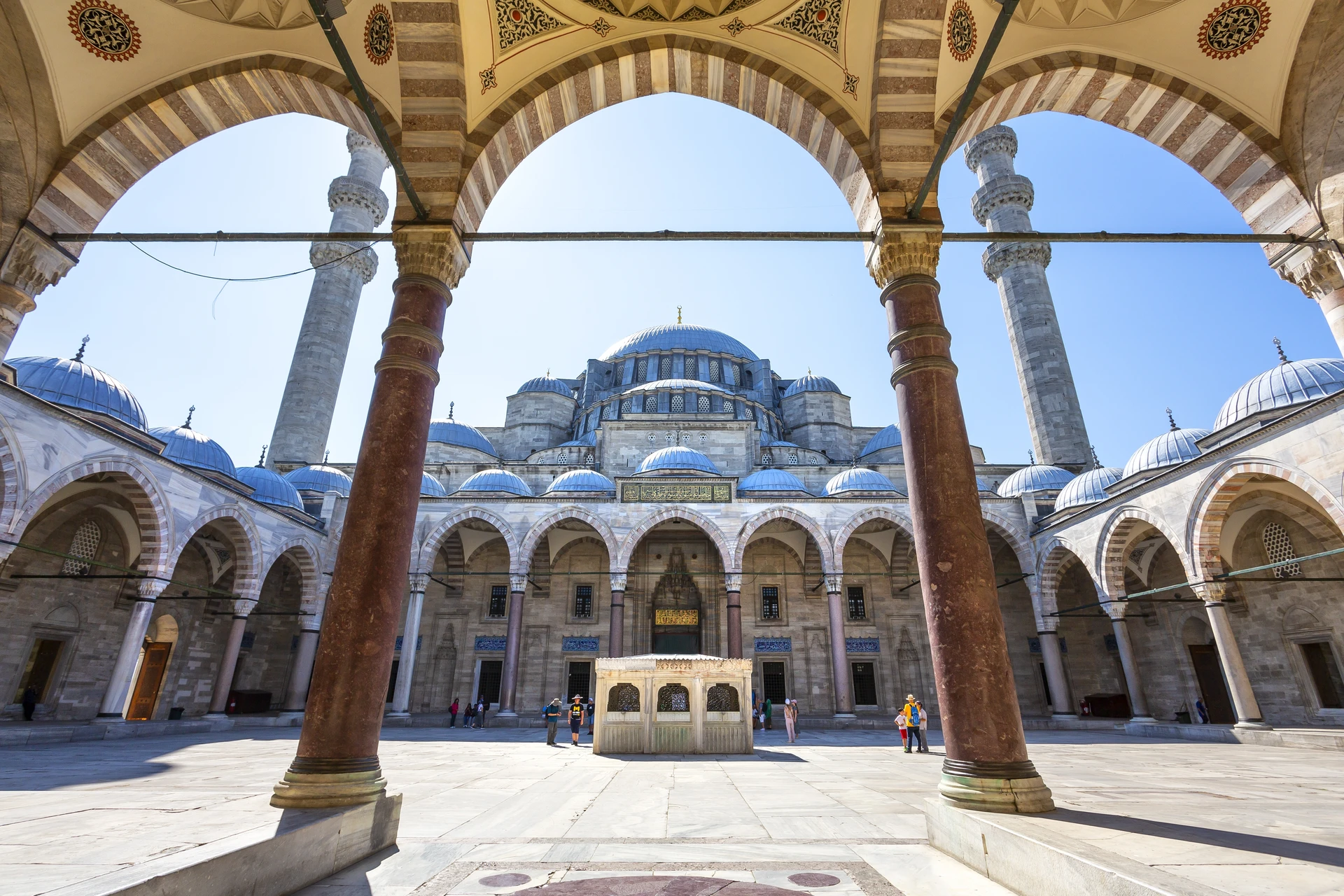
Blue Mosque
At Sultan Ahmed’s imperial mosque, the courtyard prepares the eye for the cascade of domes on the approach. Inside, patterned İznik tiles give the building its familiar English name. This is an active mosque, and the rhythm of worship shapes a visit.
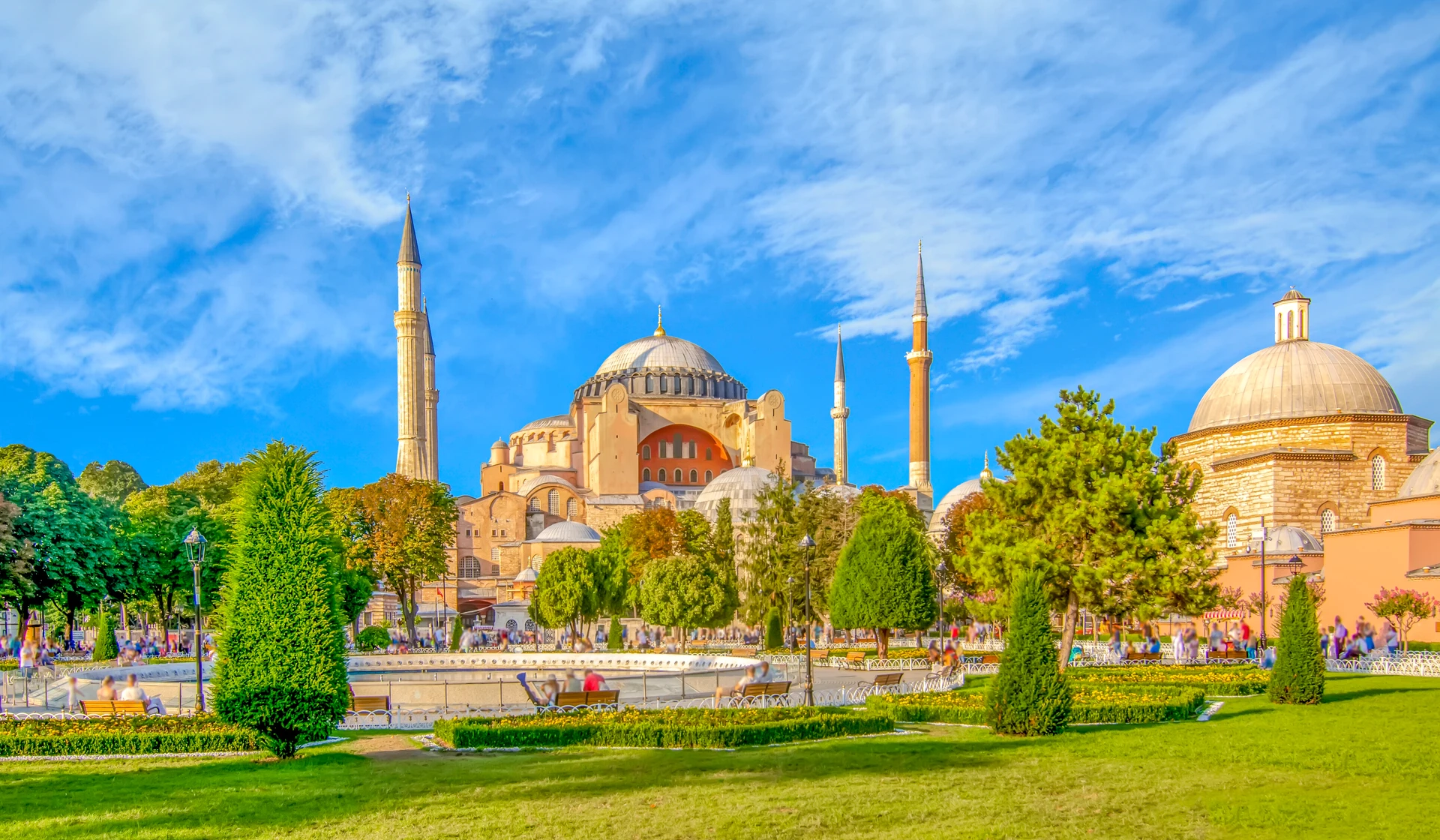
Hagia Sophia
The great dome of Justinian’s sixth-century church appears to float above a ring of windows. Later additions record its long Ottoman history. Looking from the massive supporting piers towards the lighter surfaces above helps explain the impact of the interior.
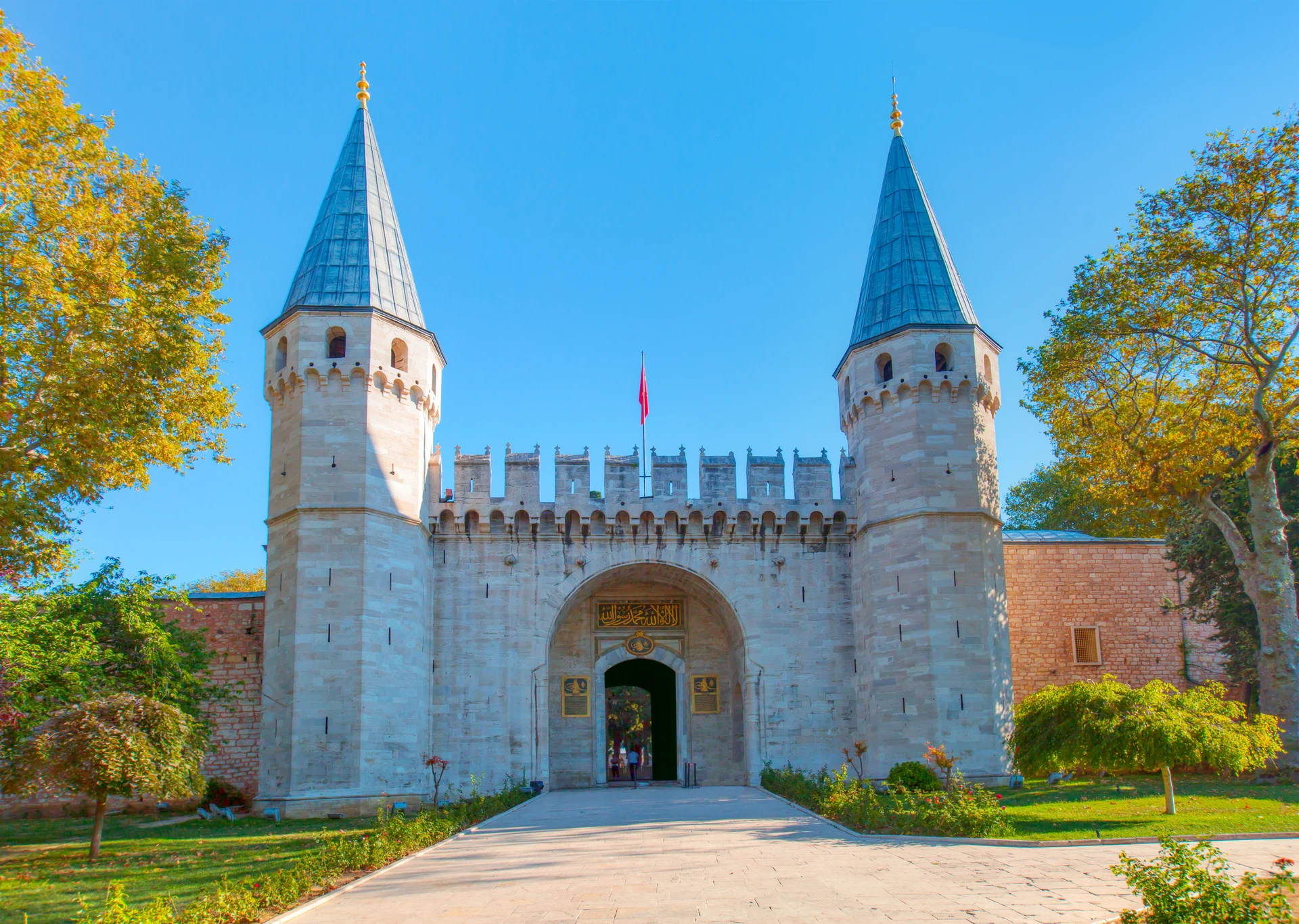
Topkapı Palace
A sequence of gates and courts organised access to the Ottoman palace. The spaces become more selective as you move away from the public entrance. Kitchens, council buildings and pavilions make the work of a court visible alongside the private life of its rulers.
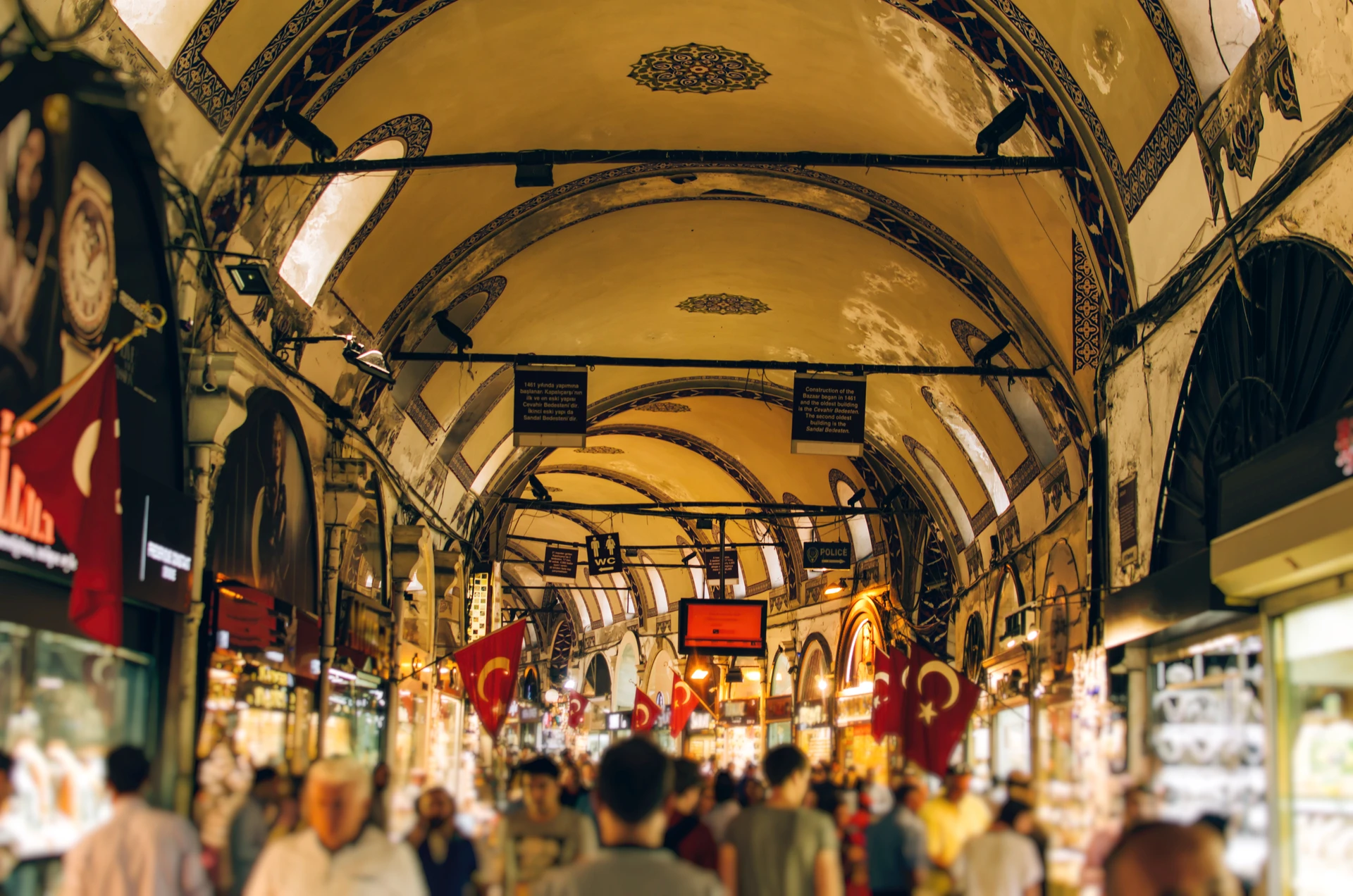
Grand Bazaar
Istanbul’s covered market grew around secure trading buildings called bedestens. The transition from these heavy masonry cores to branching lanes of shops explains its varied scale. Look up at the vaults and follow the changes in street width as well as the displays.
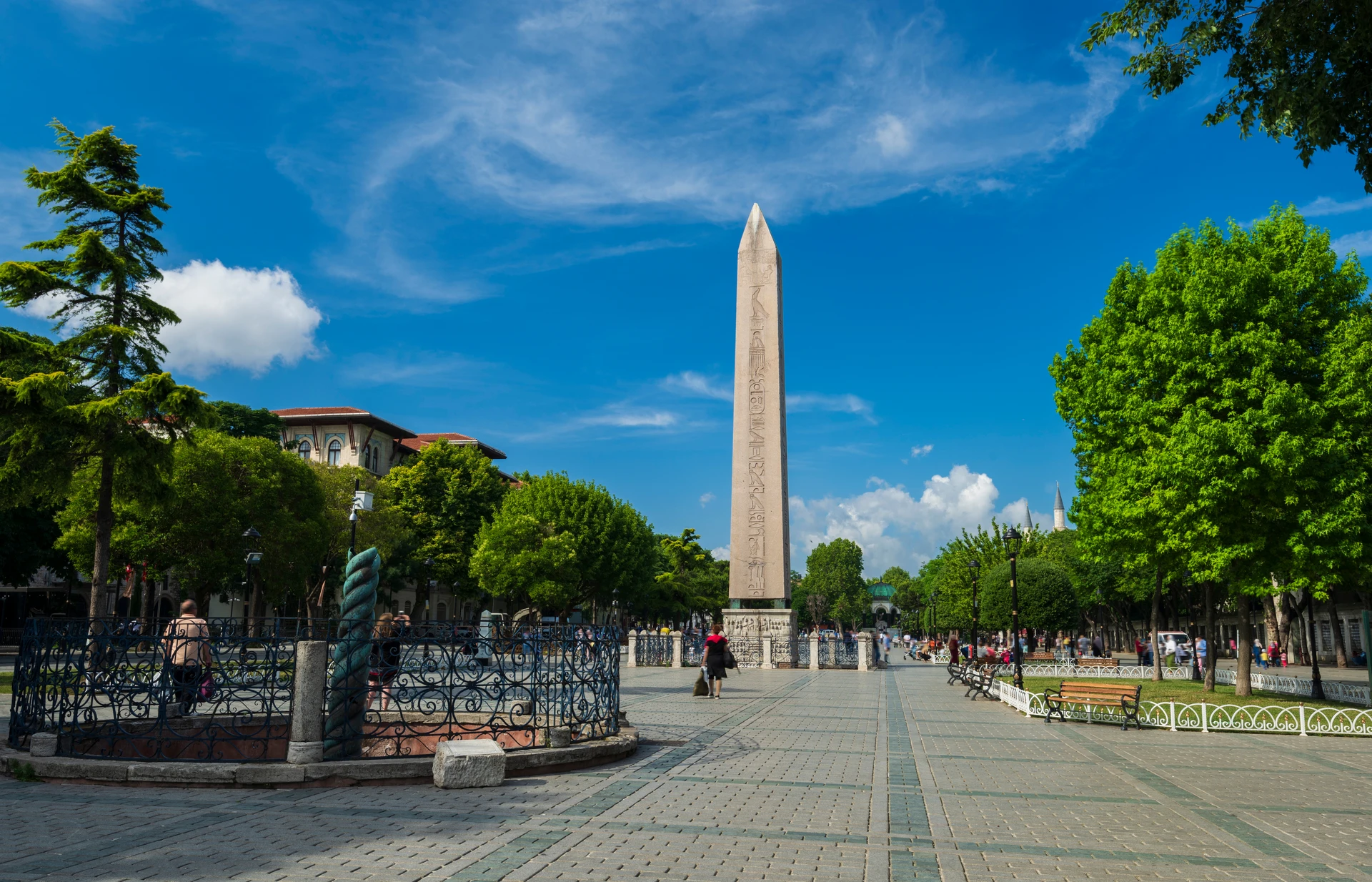
Hippodrome of Constantinople
The open square beside the Blue Mosque follows the long axis of the Byzantine racing ground. The Egyptian obelisk, Serpent Column and masonry obelisk once stood along its central barrier. Their alignment makes it possible to imagine the circuit after the seating disappeared.